
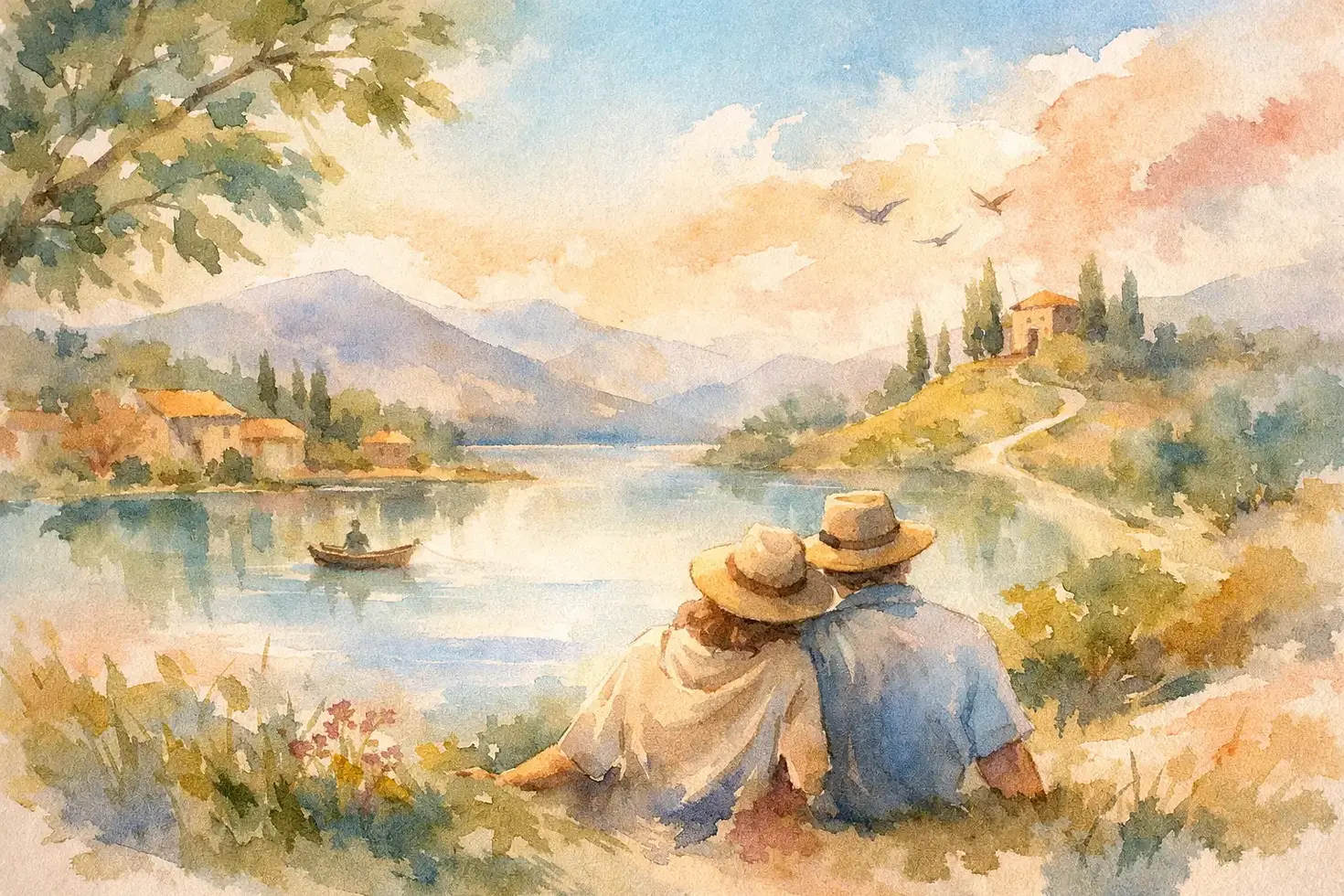
Restorative Travel for Adults, at a Slower Pace
The holiday begins before the suitcase is unpacked. It begins when the noise drops away: no lobby traffic outside your door, no timetable to follow, no pressure to make every hour productive. Restorative travel for adults is less about escaping life than returning to yourself with a little more space, sleep, sunlight, and ease.
For many of us, a break has become another project. We compare restaurants, fill each day with reservations, and come home with a full camera roll but very little energy. A restorative stay asks for something quieter. It makes room for a slow breakfast, an unplanned afternoon, a long conversation, and the small pleasure of watching the light change across the hills.
What restorative travel for adults really means
Restoration is personal. For one traveler, it may mean sleeping deeply after months of early alarms. For another, it is walking alone beneath olive trees, reading without checking the time, or sharing a simple meal with a partner under a sky full of stars.
The common thread is not a prescribed wellness program. It is freedom from constant input. Adults often carry full calendars, responsibilities, screens, and the quiet mental work of looking after everyone else. A truly restorative trip creates gentle conditions for that load to soften.
That is why privacy matters as much as beautiful scenery. A busy resort may offer a spa, pools, and plenty to do, but it can also bring queues, noise, and the feeling that you need to be somewhere. A private rural stay offers a different kind of comfort: the confidence that the day is yours alone.
Choose a place that lets your nervous system settle
The setting shapes the pace. Cities can be exciting and culturally rich, but they ask something of you. There are streets to navigate, crowds to move through, and choices at every turn. For a short break, that energy can be wonderful. For deeper rest, many travelers find that nature gives more than it asks.
In the mountains of Andalusia, mornings arrive gently. Birdsong carries through the stillness, the air can feel cooler before the midday sun, and the landscape encourages your attention outward. You might notice the scent of warm earth, the movement of leaves in the breeze, or the distant outline of the Mediterranean. None of it demands a response.
A rural retreat does not mean giving up comfort. The most restorative places pair local character with the details that make a stay feel cared for: a beautiful bed, a well-equipped kitchen, a shaded terrace, thoughtful interiors, and a welcoming host nearby when needed. It is luxurious simplicity, not deprivation.
At PASO PASO, the idea is uncomplicated: our home, your casita. As the only guests on the property, you can enjoy the rare ease of having space entirely to yourselves while still feeling warmly looked after.
Privacy is not isolation
There is a useful distinction between being tucked away and being cut off. The right retreat feels peaceful without being inconvenient. You should be able to settle into the quiet, then choose an outing when curiosity calls.
Torrox and the surrounding Axarquía region make this balance especially appealing. A mountain base can offer calm, greenery, and wide-open views, while whitewashed villages, local markets, coastal lunches, and walking routes remain within reach. You can have a day of discovery without turning the whole vacation into an itinerary.
Let your days have breathing room
Restorative travel works best when there is less to fit in. This can feel unfamiliar at first, especially for travelers who only get a limited number of vacation days. The temptation is understandable: if you have traveled all the way to southern Spain, surely you should see everything.
But seeing less can help you feel more. Choose one meaningful plan for a day rather than three. Let the rest remain open. Visit a village in the morning, then return to the casita for lunch and a nap. Take a coastal drive, then come back before sunset. Make dinner from local ingredients and let that be enough.
A slower schedule also leaves room for the moments that cannot be booked. A sudden wish to sit in the sun. A longer-than-expected coffee. A roadside view that asks you to pull over. These are often the memories that remain after the details of a trip fade.
For couples, this spaciousness can be a quiet reset. Without errands, work messages, and the familiar routines of home, conversation can become lighter and more present. Solo travelers may find something equally valuable: the chance to hear their own thoughts without needing to explain, accommodate, or perform.
Build rest into the practical details
A calming destination helps, but the way you travel there matters too. If possible, resist arriving with a packed first evening. Give yourself time to settle in, open the windows, make a cup of tea, and let the journey end properly.
Consider staying long enough for your body to change gears. A weekend can offer relief, but four, five, or seven nights often create a deeper shift. The first day is for arriving. The next may still hold the urge to plan. Then, almost without noticing, your pace becomes more natural.
Independent check-in can also make a difference, particularly after a long drive or flight. There is a certain comfort in knowing that arrival does not have to be rushed. Clear information, an easy welcome, and a space prepared with care can make the first few hours feel beautifully uncomplicated.
It helps to set a few kind boundaries before you leave. Turn off nonessential notifications. Keep one device-free meal each day. Bring a book, a sketchpad, or nothing at all. The goal is not to be strict about relaxation. It is simply to protect the quiet you came for.
Leave room for pleasure, too
Rest does not need to look serious. A restorative trip can include late dinners, local wine, a swim, a favorite playlist, and a little afternoon indulgence. Pleasure is part of feeling well, especially when it is unhurried and freely chosen.
The trade-off is worth acknowledging. Rural stays are not designed for travelers seeking nightlife outside the door or a new spectacle every hour. Roads may be winding, and a car is often useful. Yet for guests who want stillness, a more personal sense of place, and evenings that belong to them, those details are often part of the appeal.
Bring the feeling home with you
The loveliest restorative trips do not end at checkout. They can gently remind you what you miss in ordinary life: eating outside, walking without a destination, going to bed earlier, or allowing an empty afternoon to remain empty.
You do not need to recreate a mountain retreat at home. Choose one small practice that felt good while away and keep it close. Perhaps it is a slower morning on Sundays, a phone-free hour after dinner, or a habit of stepping outside before the day begins. The point is not perfection. It is to give the calmer version of yourself a little more room to stay.
When choosing your next escape, look beyond the number of attractions nearby. Ask a more useful question: will this place help me feel rested enough to notice my own life again? A quiet casita, warm sun, and a few unscheduled days may be all the answer you need.
Comments